

Psyllium “Plantago ovata”, commonly referred to as Isabgol, originates from India and is mainly found in the north-western parts of the nation, especially in Rajasthan and Gujarat states. These areas possess the perfect climate and soil conditions for the plant to flourish and are recognized for producing premium Psyllium seeds.
Psyllium is a fiber obtained from the seed husks of the Plantago ovata plant. Psyllium husk, psyllium powder, and psyllium seeds come from the same plant but are processed and used in various ways.
Plantago ovata seeds are the source of psyllium, a type of soluble fiber. It is frequently utilized as a dietary supplement to enhance digestive health, particularly for alleviating constipation and promoting bowel regularity. Psyllium functions by taking in water within the digestive system, creating a gel-like material that aids in softening stool and easing its movement through the intestines.
It can additionally assist in reducing cholesterol levels and enhance a sensation of satisfaction, which makes it a favoured option for managing weight. Psyllium is available as capsules, powder, or granules and should be consumed with sufficient water to avoid dehydration. Following the suggested dosage guidelines and seeking advice from a healthcare professional before beginning any new supplement routine is essential.
Psyllium seeds are the complete seeds derived from the Plantago ovata plant. They contain both soluble and insoluble fiber, as well as other nutrients like protein and vitamins. Psyllium seeds are sometimes employed in herbal remedies as a natural solution for digestive issues, high cholesterol, and diabetes.
1] What is psyllium and where does it come from?
Psyllium is a kind of soluble fiber obtained from the seeds of the Plantago ovata plant, originally found in Indian states like Rajasthan and Gujarat. The seeds undergo processing to obtain the fiber, often utilized as a dietary supplement or as a component in particular foods and drinks. Psyllium is recognized for its capacity to take in water and create a gel-like material in the digestive system, aiding in promoting regularity and enhancing digestion.
2] What is the difference between psyllium seeds and psyllium husk?
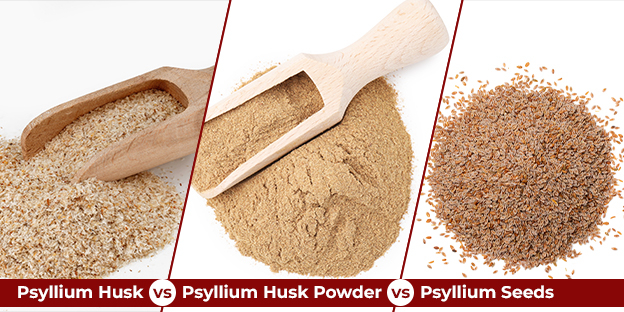
Psyllium seeds and psyllium husk both originate from the Plantago ovata plant, yet they are utilized and processed in distinct ways. Psyllium seeds are the small, reddish-brown seeds from the plant. They are generally utilized as a bulk-forming laxative to alleviate constipation and encourage regular bowel movements. They can be crushed and blended with water or other fluids to form a thick gel that aids in softening and increasing stool volume.
The psyllium husk is the outer layer of the seed that is peeled off. As a soluble fiber, it is commonly used as a dietary supplement to improve digestive health, control cholesterol, and promote weight loss. Psyllium husk can be combined with water or other liquids to create a gel-like texture, which aids in enhancing sensations of satiety and managing bowel movements.
3] What is psyllium husk powder?
Psyllium powder is made by finely milling the psyllium husks, creating different mesh sizes. Psyllium husk powder is a nutritional supplement sourced from the seeds of the Plantago ovata plant. It is a soluble fiber often utilized as a laxative to alleviate constipation and encourage regular bowel activity. Psyllium husk powder may aid in reducing cholesterol levels, enhancing digestion, and fostering a sense of satiety, which makes it a favored component in fiber supplements and various food items.
Psyllium powder is often used as a natural laxative or as a thickening agent in baking and cooking. It contains the same soluble fiber present in psyllium husk but blends more readily into liquids such as water or smoothies.
4] Which is more effective: psyllium husk or powder?
Both psyllium husk and psyllium powder have more potent textures. This results from psyllium husk’s higher fiber and mucilage content, which also helps to explain its laxative and cholesterol-lowering qualities. Additionally, psyllium husk is used as a supplement that dissolves in shakes and water. In contrast, psyllium powder may contain less mucilage and fiber, which would lessen its ability to improve digestive health and lower cholesterol.
Although it dissolves more easily in liquid, psyllium powder is utilized in baking and many other food products. It is convenient for some people to incorporate into their diets. Ultimately, the effectiveness of psyllium husk or powder will depend on individual needs and preferences.
5] Which form is easier to digest: seeds, husk, or powder?
Psyllium Powder is typically simpler to digest than seeds and husks. Powdered forms are ground more finely, which facilitates the digestive system’s ability to break down and absorb nutrients efficiently. Seeds and husks might be harder to digest because of their tougher outer shells.
Comparison of Psyllium Husk vs Psyllium Husk Powder vs Psyllium Seeds
| Aspect | Psyllium | Psyllium Seeds | Psyllium Husk | Psyllium Husk Powder |
| Origin | From Plantago ovata, native to India (Rajasthan, Gujarat) | Derived from the whole seed | Outer layer of the seed | Finely milled husk |
| Form | Soluble fiber | Reddish-brown seeds | Thin, flaky husk | Fine powder |
| Processing | Fiber extracted from seeds | Raw or crushed seeds | Husk separated from seed | Husk ground into fine mesh sizes |
| Uses | Digestive health, regularity, dietary fiber | Laxative, stool softener | Supplements, cholesterol control, weight loss | Natural laxative, baking, smoothies |
| Solubility | Forms gel-like material in gut | Forms gel when mixed with fluids | Swells with liquid, forms gel | Blends more easily into liquids |
| Effectiveness | Promotes digestion and satiety | Bulking agent for stools | Higher in mucilage and fiber, more effective | Slightly less mucilage, but convenient |
| Ease of Digestion | Moderate | Harder to digest (tough outer shell) | Easier than seeds, but still coarse | Easiest to digest due to fine grind |
| Cholesterol-Lowering | Yes | Moderate | High | Moderate to high |
| Common Application | Food & beverage additive, supplements | Crushed and mixed with water | Mixed with water, shakes | Baking, thickening, smoothies |
| User Preference | Depends on individual goals | Those preferring whole fiber | Those focusing on high fiber intake | Those seeking convenience and ease |
In conclusion, psyllium husk, powder, and seeds all have fiber and are utilized to enhance digestive wellness. Nonetheless, they vary in their processing, texture, and particular uses. Following the suggested dosage guidelines and seeking advice from a healthcare professional before adding psyllium to your diet is essential.
For related reading, we recommend our blog on the benefits of psyllium husk.
One of the main providers of both conventional and organic psyllium seeds, husks, and powder is Kisan Agro. They are well-known around the world for their superior psyllium supplies. To learn more, get in touch with us.
