From the ancient temples of India to the traditional kitchens across Asia, sesame seeds have quietly maintained their place in natural medicine for thousands of years. Both Ayurveda and Traditional Chinese Medicine speak highly of these tiny seeds for their ability to nourish the body, reduce inflammation, and even promote glowing skin.
Fast forward to today, and sesame is experiencing a well-deserved revival. Nutritionists and food enthusiasts now reach for sesame oil, tahini, and toasted seeds not only for their flavor but also for their genuine health benefits. Supported by modern science, these seeds are rich in minerals, healthy fats, and unique plant compounds that significantly contribute to your heart, bones, digestion, and more.
This guide explains exactly why sesame seeds belong in your pantry, provides simple ways to enjoy them daily, and offers tips for getting the most out of every bite.
What’s Inside Sesame Seeds?
Tiny as they are, sesame seeds deliver an impressive mix of nutrients in every spoonful. Here is the nutritional overview:
- Protein: 4–5 grams per 3 tablespoons.
- Healthy fats: Mostly monounsaturated and polyunsaturated fats (MUFAs & PUFAs).
- Dietary fiber: Around 3 grams per 3 tablespoons.
- Minerals: Rich source of calcium, magnesium, zinc, copper, and iron.
- Vitamins: B-complex vitamins and vitamin E.
- Antioxidants: Unique lignans like sesamin and sesamol that help fight free radicals.
Here’s a snapshot of what you get in a typical serving:
| Nutrient |
Amount (per 27 g) |
| Calories |
~156 kcal |
| Protein |
4.8 g |
| Total Fat |
13.5 g |
| Dietary Fiber |
3.3 g |
| Calcium |
~264 mg |
| Iron |
~3.9 mg |
| Magnesium |
~95 mg |
| Zinc |
~2.1 mg |
| Copper |
~1.1 mg |
| Vitamin B1 (Thiamine) |
~0.21 mg |
| Vitamin B6 |
~0.21 mg |
| Vitamin E |
~0.06 mg |
| Antioxidants |
Lignans (sesamin, sesamol) |
Source: USDA FoodData Central
Health Benefits of Sesame Seeds:
- Improves Heart Health
- Supports Bone and Joint Health
- Aids Digestion and Gut Health
- Manages Blood Pressure
- Helps in Blood Sugar
- Boosts Immunity and Thyroid Function
1) Improves Heart Health -
Thanks to natural lignans and phytosterols, sesame seeds can help reduce LDL (bad) cholesterol and triglycerides. Their unsaturated fats also replace unhealthy saturated fats, keeping arteries flexible and your heart healthy.
2) Supports Bone and Joint Health -
A few tablespoons of sesame cover a good chunk of your daily calcium needs, along with magnesium and zinc. Together, they help strengthen bones, support joint health, and may lower the risk of osteoporosis.
3) Aids Digestion and Gut Health -
The fiber in sesame seeds keeps things moving smoothly and helps maintain gut health. Many people find that sesame is a gentle natural laxative and can even soothe mild gut inflammation.
4) Manages Blood Pressure and Blood Sugar -
Sesamin and magnesium in sesame seeds naturally support lower blood pressure. Compounds like pinoresinol may also help regulate blood sugar levels, which is good news for people watching their glucose.
5) Boosts Immunity and Thyroid Function -
Sesame seeds are smart for keeping your immune system in top shape. Zinc, selenium, copper, and vitamin E help regulate hormones, including those linked to healthy thyroid function.
6) Fights Inflammation and Oxidative Stress -
Antioxidants such as sesamol help neutralize free radicals. Regular intake may lower markers of chronic inflammation in the body, including IL-6, which is often elevated in long-term inflammatory conditions.
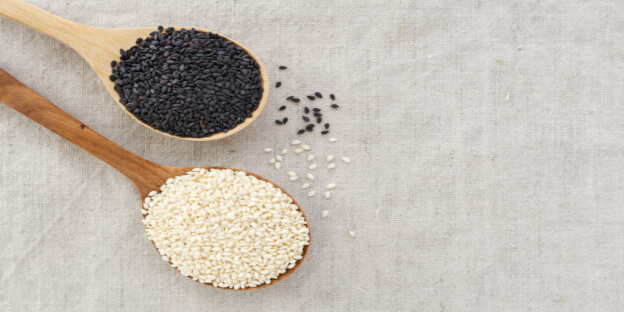
Black vs White Sesame Seeds: Which Should You Choose?
Both black and white sesame seeds are nutritious, but they shine in slightly different ways.
| |
Black Sesame |
White Sesame (Hulled) |
| Antioxidants |
Higher levels due to the intact hull |
Moderate but still beneficial |
| Minerals |
Slightly richer in calcium, iron, and other trace minerals |
Good source, but a bit lower |
| Flavor |
Stronger, earthy, slightly bitter |
Milder, nuttier, naturally sweeter |
| Best Use |
Traditional and therapeutic uses, medicinal recipes, and health tonics |
Everyday cooking, baking, salad toppings, and tahini |
Which one is right for you?
If you’re looking to boost antioxidants and minerals for specific health benefits, go for black sesame. For daily cooking, baking, and easy toppings, white sesame is mild, versatile, and blends well with most dishes.
Easy Ways to Eat More Sesame Seeds:
Adding sesame to your diet doesn’t need fancy recipes:
- Toast them: Sprinkle over salads, noodles, cereals, or rice for a nutty crunch.
- Soak or sprout: This improves mineral absorption and makes them easier to digest.
- Sesame oil: In cooking, dressings, or even as a natural skincare oil for glowing skin.
- Tahini: Blend into hummus, sauces, or creamy dressings.
- Smoothies & baking: Mix seeds or tahini into smoothies, energy bars, or baked goods for an extra nutritional boost.
What are the side effects of eating too much sesame?
Sesame seeds are healthy, but not without risks:
- Possible allergy: Sesame is one of the top food allergens worldwide, so if you or your children are sensitive, be cautious.
- Antinutrients: Raw seeds contain compounds that can inhibit mineral absorption, so soaking or roasting is advisable.
- Excessive amounts: Large quantities could lead to bloating or mild stomach upset. Aim for about 1–3 tablespoons a day.
Always purchase from reputable brands. Certified organic, ISO, or HACCP seals ensure you’re getting pure, safe seeds.
The Bottom Line:
Sesame seeds demonstrate that significant health benefits can come in the smallest packages. They have been used for millennia, from ancient healing practices to modern scientific studies, and they belong in your everyday eating habits. They can be toasted, ground, and their oil can be drizzled on food, just don't forget to enjoy them thoughtfully!
At Kisan Agro, we grow, process, and export premium-quality sesame seeds and a wide range of trusted spices. Visit our website or contact us today to learn more or place an order.
FAQs:
1] What are the benefits of sesame seeds?
They help support heart health, stronger bones, digestion, immunity, and skin and hair health.
2] How much sesame seeds should you eat a day?
One to three tablespoons per day is enough for most adults.
3] Who should not take sesame seeds?
Anyone with a sesame allergy or severe digestive issues should be careful or consult a doctor.
4] Are black sesame seeds more beneficial than white sesame seeds?
Black seeds have more antioxidants and minerals, but both types are good for you.
5] Do sesame seeds support bone health?
Absolutely. High in calcium, magnesium, and zinc.
6] Are sesame seeds good for skin and hair?
Yes. Vitamin E and healthy fats help nourish skin and strengthen hair.
7] Can sesame seeds help manage blood pressure?
Yes. Studies link magnesium and sesamin in sesame to healthy blood pressure.
8] What is the best way to consume sesame seeds?
Toasted, soaked, in tahini, or as sesame oil. Easy and tasty.
9] Are there any side effects of consuming sesame seeds?
Allergies and bloating occur if you eat too much. Keep it moderate.
10] How much sesame seed should I eat daily for health benefits?
1–3 tablespoons daily is a good range.